


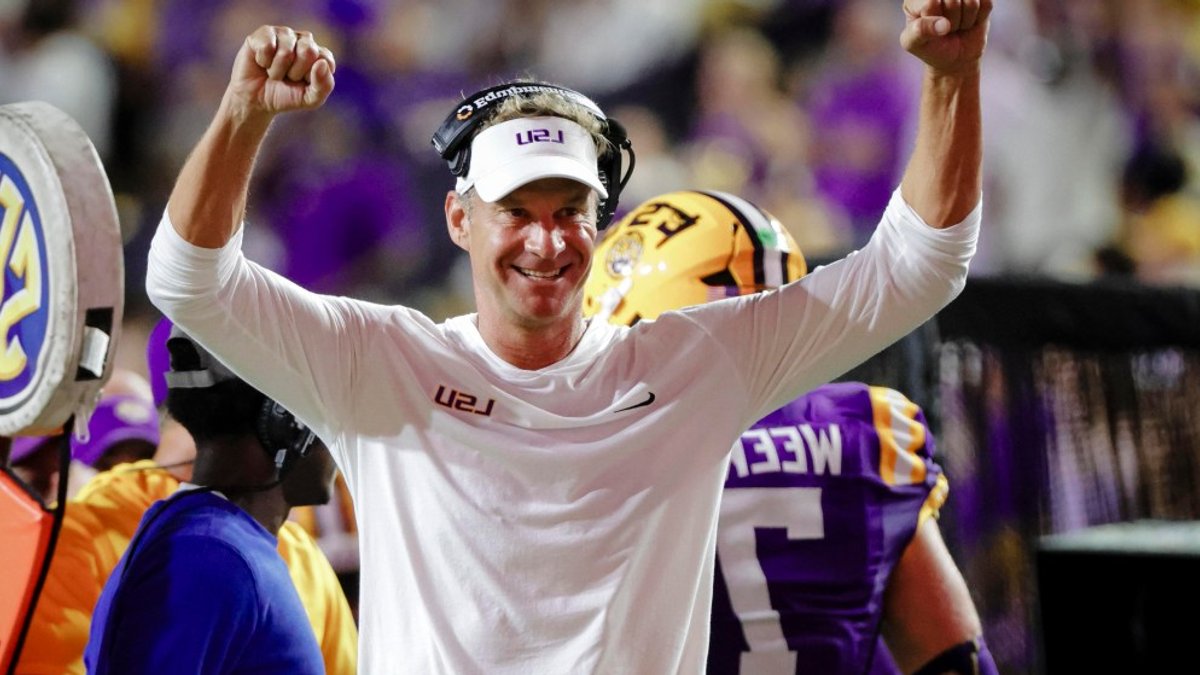
Lane Kiffin departed Ole Miss for LSU at the height of his achievements, shifting from a program he had revitalized to a more prominent role. His exit followed six seasons in Oxford, where he turned a struggling team into a national contender. Under his direction, the Rebels improved from a 4-8 record in 2020 to a 10-3 finish in 2024, capped by an 11-1 regular season and a No. 4 ranking before missing the College Football Playoff by a narrow margin.
The decision to leave stunned fans and observers, particularly since Kiffin had appeared to establish stability in Oxford—a place where he had become known as a winner. The timing was unexpected: Ole Miss was poised for a playoff push, and Kiffin had previously indicated he would remain. Yet just two days after a sportswriter argued he should stay, he announced his move to LSU.
On November 30, 2025, Kiffin posted on social media that he had requested permission to coach the Rebels in their playoff game but was instructed by athletic director Keith Carter to step aside. Instead, he traveled to Baton Rouge, speaking with ESPN’s Marty Smith before his departure to explain his choice.
“My heart was here,” Kiffin said, “but I talked to some mentors. Coach Pete Carroll told me, ‘Your dad would want you to take this opportunity.’” He admitted regret over leaving Tennessee after just one season but believed Ole Miss had benefited from his work. “We contributed significantly to this program and delivered some of the most memorable wins in this stadium,” he stated.
Read Also: Lyon, Barcelona lead Women’s Champions League push
Recruiting struggles and SEC controversy
His departure extended beyond football. A Vanity Fair profile revealed frustrations with recruiting in Oxford, where top prospects often cited concerns about the city’s reputation. Kiffin quoted recruits saying, “‘We love you, Coach, but my family won’t let me move to Oxford, Mississippi.’” Parents, he noted, frequently praised LSU’s diversity as more representative of modern life—a remark that provoked backlash and led the SEC to investigate potential disciplinary action.
Kiffin later clarified to USA Today that he had been relaying recruits’ concerns, not expressing his own perspective. However, the controversy persisted, and by the time he faced the media at SEC Media Days in July 2026, his public stance had shifted. As LSU’s new head coach, he framed his decision as a deliberate step outside his comfort zone.
“I’ve always thrived by stepping beyond what’s familiar,” he said. “This role demands that even more. There’s greater potential here than anywhere else I’ve coached.” He acknowledged the high expectations at LSU but welcomed the challenge. “If you want to discuss discomfort, this is it.”
From hero to rival
The contrast between his time at Ole Miss and his arrival in Baton Rouge was sharp. In Oxford, he had been celebrated as an architect of a winning culture. In LSU’s eyes, he became a polarizing figure, arriving amid controversy, facing criticism in Oxford, and preparing to face the Rebels in an early-season SEC clash. The game would transcend football, becoming a collision of personal histories, rivalries, and unresolved disputes.
Read Also: Women’s Champions League Kicks Off with High-Stakes Clashes
Security measures in Oxford reflect the heightened stakes. Local police and the Mississippi Highway Patrol have increased patrols along University Avenue and near Vaught-Hemingway Stadium, where crowds are projected to exceed 60,000. Fans traveling from LSU will encounter checkpoints, and tailgating areas have been expanded to accommodate overflow. The university has also restricted alcohol sales near the stadium, citing past incidents during high-profile contests. Meanwhile, LSU students and alumni have organized bus trips to Oxford, ensuring a strong presence in the stands.
Kiffin’s return to Vaught-Hemingway Stadium marks his first appearance as an opponent since leaving. The venue, where he won 58 games in six seasons, now blends nostalgia with resentment. Ole Miss fans will likely boo his name, but the Rebels’ roster, led by quarterback Jaxson Dart, who took over after Trinidad Chambliss’s graduation, will focus on the game. Dart, a two-time All-SEC selection, has called Kiffin’s departure “a betrayal,” though he recognizes the difficulty of facing LSU’s new offensive system, which Kiffin has described as “aggressive and unpredictable.”
LSU’s offensive firepower vs. Ole Miss’s defense
LSU’s offense, constructed around portal additions like wide receiver Javon McKinley and quarterback Jayden Daniels, will test Ole Miss’s defense, which has struggled against elite pass-heavy teams. LSU’s coaching staff, including offensive coordinator Joe Brady, has studied Ole Miss’s film in detail, targeting weaknesses in their secondary coverage. Meanwhile, Ole Miss’s rushing attack, ranked among the SEC’s top-10, will aim to control the line of scrimmage, a strategy Kiffin once perfected but now faces as an outsider.
The first quarter will begin at 7:30 p.m. CT, with both teams’ starting lineups set to be announced during the stadium’s pregame ceremony. Kiffin will stand on LSU’s sideline as the Ole Miss band plays “The Battle Hymn of the Republic,” a song once tied to his success. The kickoff will signal the start of a night where every play, cheer, and boo carries the weight of unfinished business.


